Friday, October 23, 2026
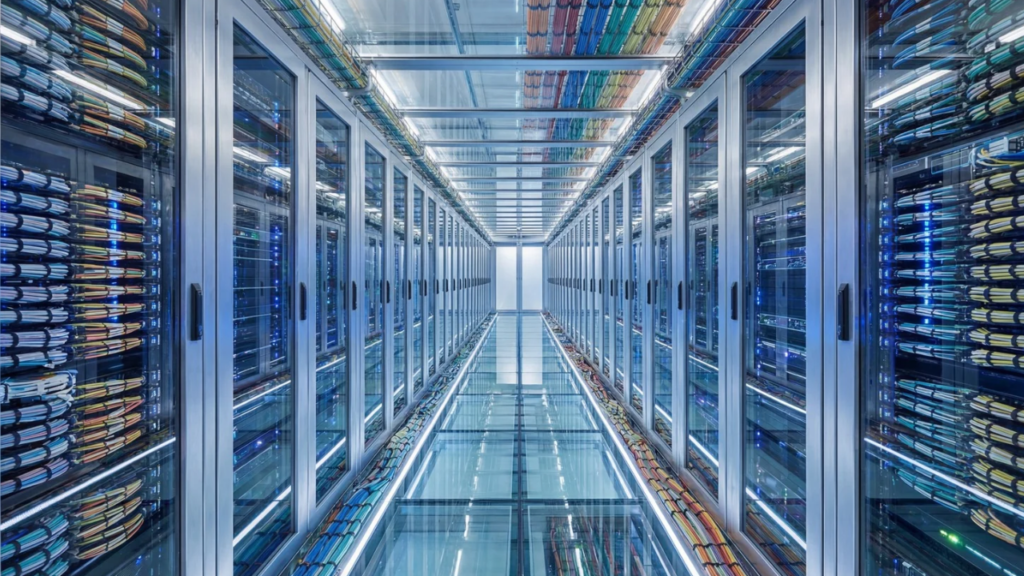
Discussions of U.S.-China competition in artificial intelligence (AI) tend to focus on chips, but AI also runs on electricity, and here the two countries diverge sharply. China generates roughly twice as much electricity as the United States, and its capacity continues to grow rapidly. The United States leads in AI laboratories and chip technology, but interconnection backlogs and equipment shortages limit how quickly its grid can expand, even as electricity demand from data centers is projected to more than double by 2030.
In an interview conducted on October 23, 2026, Baruch College’s Gang He and Johns Hopkins SAIS’s Jeremy Wallace join the Asia Society Policy Institute’s Kate Logan to discuss what grid capacity means for AI development in both countries, how China’s “East Data, West Computing” strategy is reshaping where data centers draw their power, and what is at stake for electricity costs, emissions, and grid reliability.
Speakers
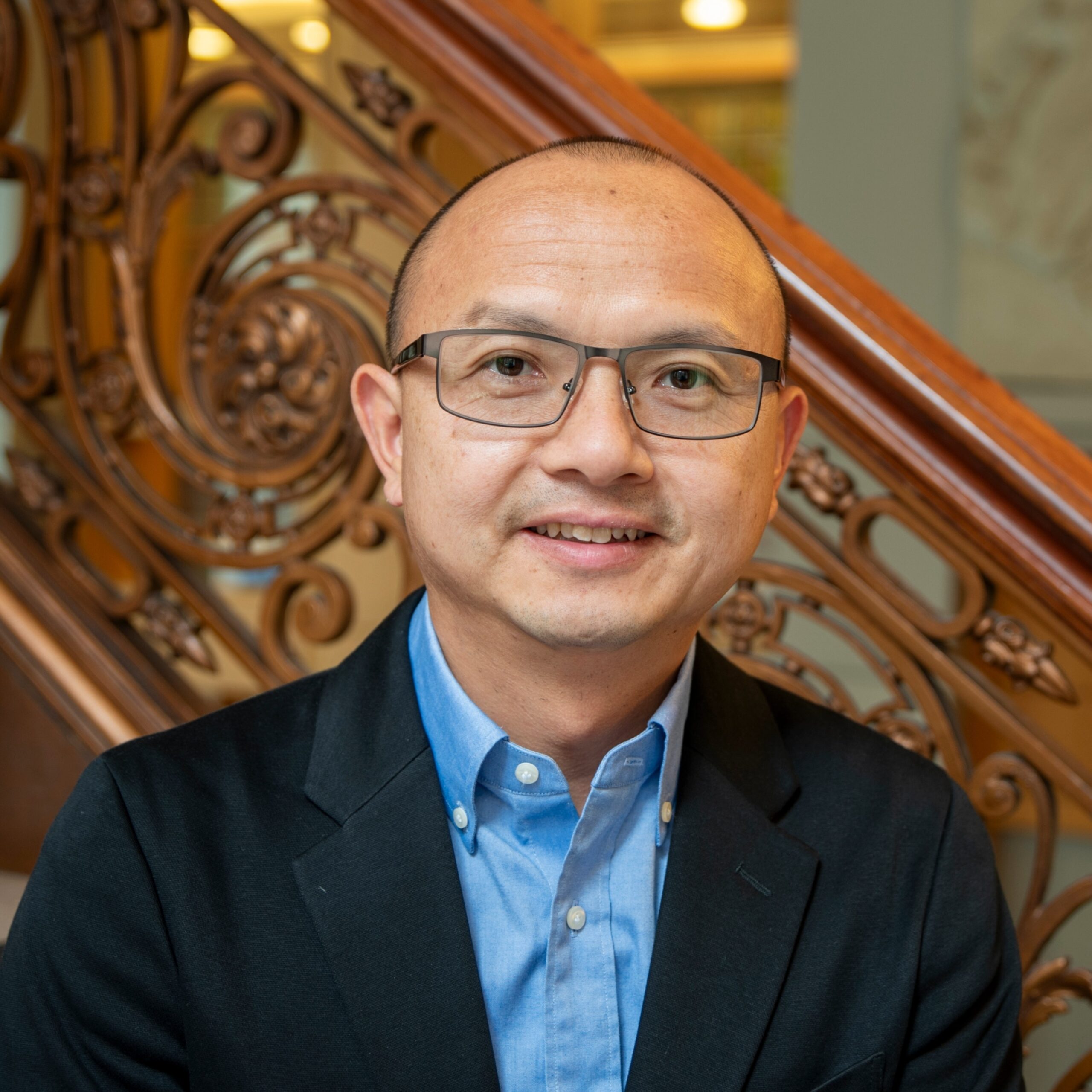
Gang He
Gang He is an associate professor at the Marxe School of Public and International Affairs at Baruch College, City University of New York, where he founded and directs the Deep Energy and Climate Policy Lab. His research examines energy systems, climate policy, and sustainable development, with an emphasis on pathways to carbon neutrality.
Dr. He’s work has appeared in journals including Nature, Nature Energy, and One Earth, and has informed the IPCC Sixth Assessment Report and New York State’s climate planning. He is a fellow of the National Committee’s Public Intellectuals Program and has been named to the Stanford/Elsevier World’s Top 2% Scientists list three times.
He holds a Ph.D. in energy and resources from the University of California, Berkeley, an M.A. from Columbia University, and B.S. and M.S. degrees from Peking University.

Jeremy Wallace
Jeremy Wallace is the A. Doak Barnett Professor of China Studies at the Johns Hopkins School of Advanced International Studies, where he is also a faculty affiliate at the Institute for America, China, and the Future of Global Affairs. He is a nonresident senior fellow at the Asia Society’s Center for China Analysis. His research examines Chinese politics, climate change, cities, and statistics, and his book project explores China and the green technology revolution.
Dr. Wallace is the author of Seeking Truth and Hiding Facts: Information, Ideology, and Authoritarianism in China (Oxford University Press, 2022) and Cities and Stability: Urbanization, Redistribution, and Regime Survival in China (Oxford University Press, 2014). He has written for Foreign Affairs, Foreign Policy, and Wired.
He previously taught at Cornell University and Ohio State University. A fellow in the National Committee’s Public Intellectuals Program, he holds a Ph.D. in political science from Stanford University.
Moderator

Kate Logan
Kate Logan is director of the China Climate Hub and Climate Diplomacy at the Asia Society Policy Institute and a fellow with its Center for China Analysis, where she focuses on China’s role in the geopolitics of climate change and clean technologies. She has analyzed China’s climate, energy, and environmental performance for over a decade at major think tanks, philanthropies, and nonprofits, with expertise spanning China’s domestic environmental governance, the U.S.-China climate relationship, and China’s overseas energy engagement.
She began her career in Beijing as a Princeton in Asia fellow and lived there for over five years. She holds a master’s from Yale University’s School of the Environment and a bachelor’s from Middlebury College in East Asian studies with a focus on economics.