
Tuesday, July 21, 2026
On June 12, 2026, the U.S. government placed Anthropic’s two most capable models under export controls, the first time a frontier AI model itself, rather than the chips beneath, it was treated as a controlled item. While the controls were later removed, it presented a new source of uncertainty for closed models coming out of American frontier labs. At almost exactly the same time, Chinese firms, specifically Z.ai and Moonshot, released several highly capable open-source models, which sharpened a core tension in U.S. strategy: promoting open diffusion to extend American influence while locking down its most advanced, closed systems. In this program, Samm Sacks and Kevin Xu join Graham Webster to unpack why the export controls were placed, why China has been leaning into open-source, and what this means for U.S. and Chinese leadership in artificial intelligence, respectively.
Speakers

Samm Sacks
Samm Sacks is a non-resident senior fellow at the Johns Hopkins School of Advanced International Studies’ Institute for America, China, and the Future of Global Affairs. She is concurrently a senior fellow at New America. Her research examines global technology policy with a focus on data governance and U.S.-China relations. Previously, Ms. Sacks launched the industrial cybersecurity business for Siemens in China, Japan, and South Korea. Prior to this, she led China technology sector analysis at the consultancy Eurasia Group and worked as an analyst with Booz Allen Hamilton. She has testified multiple times before the U.S. Congress and her publications have appeared in outlets including Foreign Affairs, Bloomberg, and MIT Tech Review. She has lived in and traveled to China extensively over the last 25 years and frequently participates in track two dialogues and exchanges with Chinese scholars on AI and data.
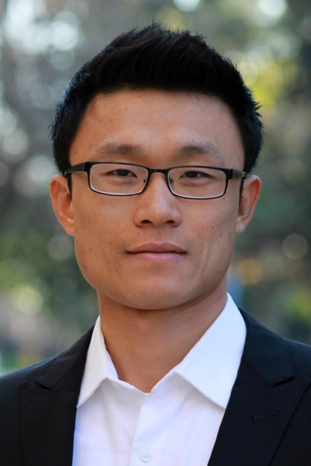
Kevin Xu
Kevin Xu is the founder of Interconnected Capital, a hedge fund that invests in the digital picks and shovels of the global AI economy. He also writes Interconnected, a bilingual English/Chinese newsletter exploring the intersection of technology, business, and geopolitics. His commentary has been cited in the Wall Street Journal, New York Times, Financial Times, and Wired, among other media outlets. Mr. Xu previously worked as a senior executive at GitHub and as a venture capitalist, and served in the White House and Commerce Department under President Obama.
Mr. Xu holds a J.D. from Stanford University and a bachelor’s degree from Brown University.
Moderator

Graham Webster
Graham Webster is a research scholar at the Program on Geopolitics, Technology, and Governance in the Center for International Security and Cooperation at Stanford University, where he leads the DigiChina Project. Previously, he was a senior fellow and lecturer at Yale Law School, where he was responsible for the Paul Tsai China Center’s U.S.–China Track 2 dialogues for five years before leading programming on cyberspace and high-tech issues. Previously, he wrote a CNET News blog on technology and society from Beijing, worked at the Center for American Progress, and taught East Asian politics at New York University’s Center for Global Affairs. He holds a master’s degree in East Asian studies from Harvard University and a bachelor’s degree in journalism and international studies from Northwestern University.