China is the largest manufacturer, installer, and user of clean energy and electric vehicles., At the same time, it emits more greenhouse gasses than any other country. While efforts to work with the United States on climate issues have stalled in recent years, a combination of grass roots activism and long term government policy are driving China’s environmental movement forward. How does China approach environmentalism? Can the United States and China resume cooperation on climate?
Alex Wang joined us on April 1, 2026 to discuss these questions and share how climate policy differs between the United States and China.
Alex’s new (open-source) book Chinese Global Environmentalism looks at how and why China is approaching global green development. The book explores how China got from a period of environmental crisis to a period of relative success and examines both both challenges and successes in-depth.
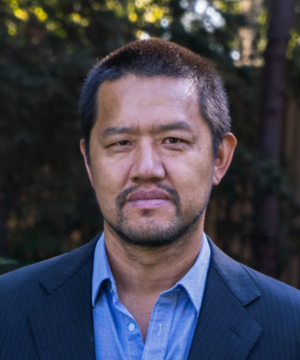
Alex Wang
Alex Wang is a Professor of Law at UCLA School of Law, Faculty Co-Director of the Emmett Institute on Climate Change and the Environment, and holder of the Walter and Shirley Wang Chair in U.S.-China Relations and Communications. His research focuses on the law and politics of Chinese environmental governance, and his scholarship has appeared in leading journals including the Ecology Law Quarterly and Harvard Environmental Law Review. Before joining UCLA, he served as a senior attorney for the Natural Resources Defense Council in Beijing, where he founded NRDC’s China Environmental Law & Governance Project and collaborated with government agencies and civil society to strengthen environmental law. He holds a J.D. from NYU School of Law and a B.S. in Biology from Duke University, and is a member of the Council on Foreign Relations and the Environmental Law Institute.