
Sunday, July 26, 2026
With a growing young population, vast natural resources, and emerging technology hubs, countries across Africa have become key sites for diplomatic competition between the United States and China. Focusing on Ethiopia, Maria Repnikova examines the ambitious and disjointed display of Chinese diplomatic influence in Africa, developing a new theoretical approach to understanding China’s practice of soft power, identifying the core mechanisms as tangible enticement with material and experiential offerings, promotion of values, visions, and governance practices, and censorial power over the production and dissemination of China narratives. Through in-depth field work, Dr. Repnikova builds a picture of the uneven implementation and reception of this image-making, in which Chinese messengers can improvise official agendas, and Ethiopian recipients can strategically appropriate and negotiate Chinese power. Contrary to popular claims about China replacing the West in the Global South, her study reveals the successes, inconsistencies, and limitations of Chinese influence, as well as the ever-present shadow of the West in mediating soft-power encounters.
In an interview conducted on July 26, 2026, Maria Repnikova joins Xiaoyu Pu to discuss China’s soft power in Africa.
Speaker

Maria Repnikova
Maria Repnikova is an expert on Chinese political communication, an associate professor in global communication, and the inaugural William C. Pate Chair in Strategic Communication at Georgia State University. She is the author of the award-winning book, Media Politics in China: Improvising Power Under Authoritarianism (2017), as well as Chinese Soft Power (2022) and Competing for Soft Power: China’s Image-Making in Africa (2026). Her writing has appeared in the New York Times, Washington Post, and the Atlantic, as well as in many academic journals. In addition to working on China, Dr. Repnikova does comparative work on information politics in China and Russia. She holds a doctorate in politics from Oxford University where she was a Rhodes Scholar. She is a recipient of several fellowships and awards, including the Wilson Fellowship (2020-2021), and is a fellow in the NCUSCR Public Intellectuals Program.
Moderator
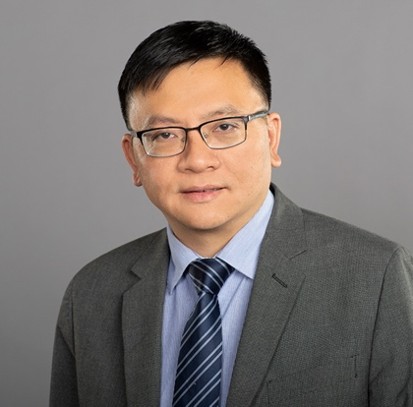
Xiaoyu Pu
Xiaoyu Pu is an associate professor of political science at the University of Nevada, Reno. His teaching and research focus on international relations, Chinese foreign policy, and U.S.–China relations. He has held fellowships or visiting appointments with the National Committee on U.S.-China Relations’ Public Intellectuals Program, the Penn Project on the Future of U.S.-China Relations, the Australian National University, the Inter-American Dialogue, Fundação Getulio Vargas in Brazil, and the Princeton-Harvard China and the World Program. He is the author of Rebranding China: Contested Status Signaling in the Changing Global Order (2019). His research has appeared in International Security, International Affairs, The China Quarterly, The Chinese Journal of International Politics, and other journals. Dr. Pu received his B.A. and M.A. from Nankai University, a second M.A. from Kent State University, and his Ph.D. from Ohio State University.