
Wednesday, September 16, 2026 | 9:30 AM EDT
China’s center-local relationship is one of the clearest signals of where the country is headed. Beijing sets broad, nationwide goals while provinces, cities, and counties decide how to carry them out. Drawing on cases from high-speed rail, the electric vehicle industry, and population policy, this conversation examines how local governments bargain to advance projects they favor while resisting objectives they do not.
On September 16, 2026, Samantha Vortherms and Xiao Ma discuss how the central government governs from the top through tools such as cadre rotation and inspection teams, and why some localities move faster than others. They also ask who bears the cost when leaders move on, leaving debts and unfinished projects behind. The balance between the center and localities is shifting under Xi Jinping, raising the question of what this means for China’s future development.
Speakers
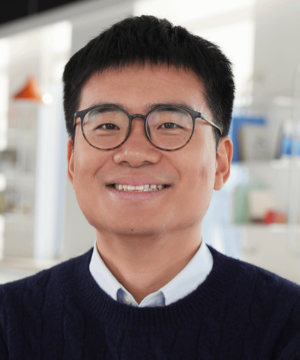
Xiao Ma
Xiao Ma is an associate professor of political science at Peking University, and a faculty associate at Peking University’s Research Center for Contemporary China. His primary research and teaching interests lie in comparative political institutions, political economy of development, and Chinese politics. Dr. Ma’s research addresses the questions of power-sharing among political elites both with and without the constraints of formal political institutions and how elite interactions, in turn, shape policy outcomes. His first book, Localized Bargaining (Oxford University Press, 2022), examines how intergovernmental bargaining, particularly by local governments, shapes China’s high-speed railway program, one of the largest infrastructure projects in human history. His work has appeared in outlets such as Comparative Political Studies, Political Communication, Security Studies, Studies in Comparative and International Development, World Development, and China Quarterly. He received his Ph.D. in political science from the University of Washington.

Samantha Vortherms
Samantha Vortherms is an associate professor of political science at the University of California, Irvine, where she teaches courses on comparative politics, research methodology, and Chinese politics. Her research evaluates how economic development changes the relationship between people and the state. Specifically, she studies how local development policies and processes of globalization shape the Chinese welfare state. She is the author of Manipulating Authoritarian Citizenship: Security, Development, and Local Membership in China (Stanford University Press, 2024) as well as articles on development, globalization, and welfare in The China Quarterly, the Review of International Political Economy, Comparative Politics, and World Development. Dr. Vortherms’ current research projects relate to identifying variation in foreign investment in China and its consequences for local development outcomes. She is a fellow in the NCUSCR Public Intellectuals Program.