Sean Stein discusses the US-China Business Council’s 2026 Member Survey, particularly how escalating U.S.-China tensions, tariffs, and export controls are reshaping the calculus for American businesses in China.
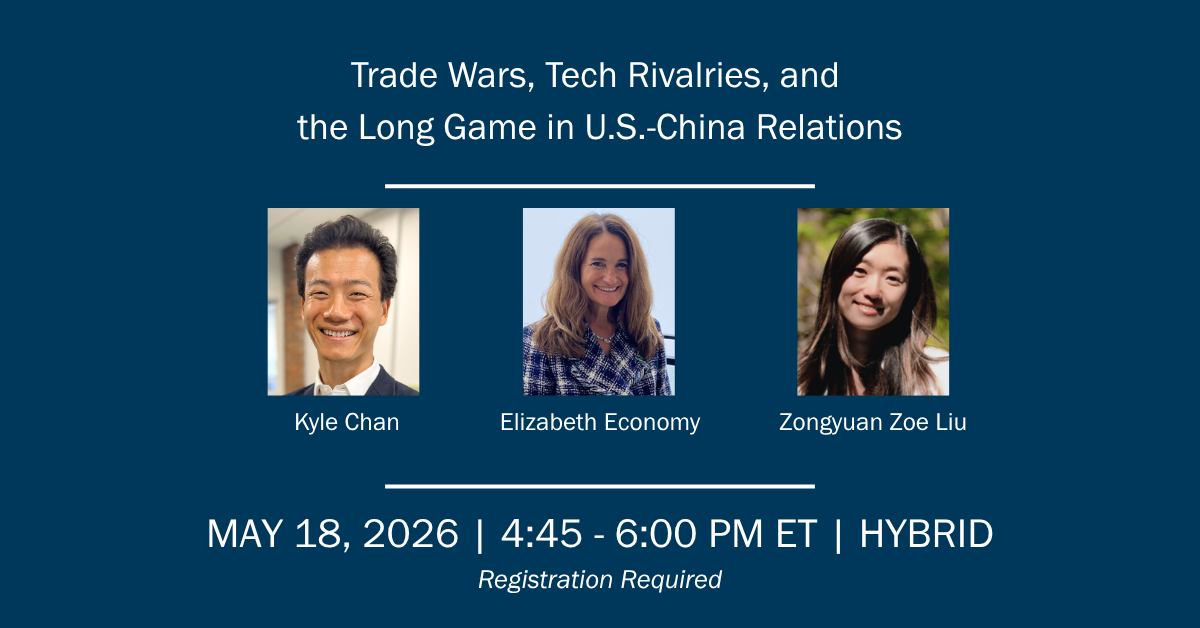
Dr. Kyle Chan, Dr. Elizabeth Economy, and Dr. Zongyuan Zoe Liu assess what the summit reveals about the trajectory of U.S.-China relations.

Anna Ashton and Cory Combs join Jessica DiCarlo to explore China’s critical minerals dominance and potential implications for the U.S.-China relationship.
Evan Medeiros and Andrew Polk examine how China’s growing use of economic coercion is reshaping the U.S.-China relationship.

Eli Friedman and Yun Zhou discuss youth unemployment in China and Chinese government policies to address workforce disengagement.

This program explores the sharp escalation of U.S.-China tariffs in early 2025, the strategic and economic stakes behind the current trade standoff, and what recent developments may signal for the future of bilateral and global economic relations.
Nicholas Borst explores the implications of the U.S. President’s America First Investment Policy.

Scott Rozelle and Yige Dong discuss the current state of work and employment in China, with a focus on migrants, rural people, and urban youth, in conversation with Kristen Looney.

Lizzi Lee talks to Scott Kennedy about what the Third Plenum means for the future of China’s economy and economic policy.
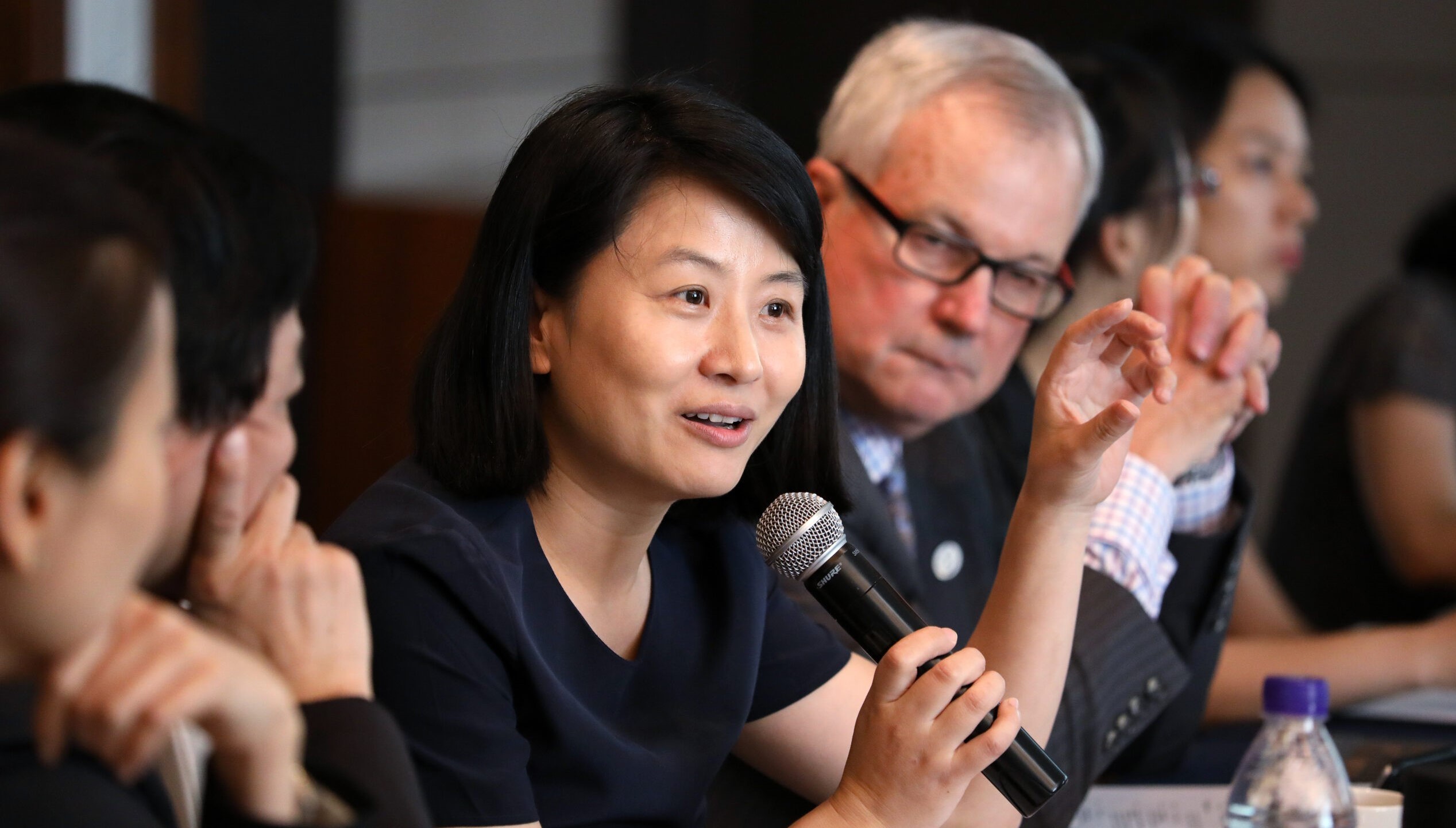
Since its inception in 2010, this bi-annual Track II dialogue has brought together leading American and Chinese economists, economic thinkers and business leaders for a day and a half of off-the-record discussions on important issues related to bilateral economic relations and the global economic system.