Tuesday, September 15, 2026
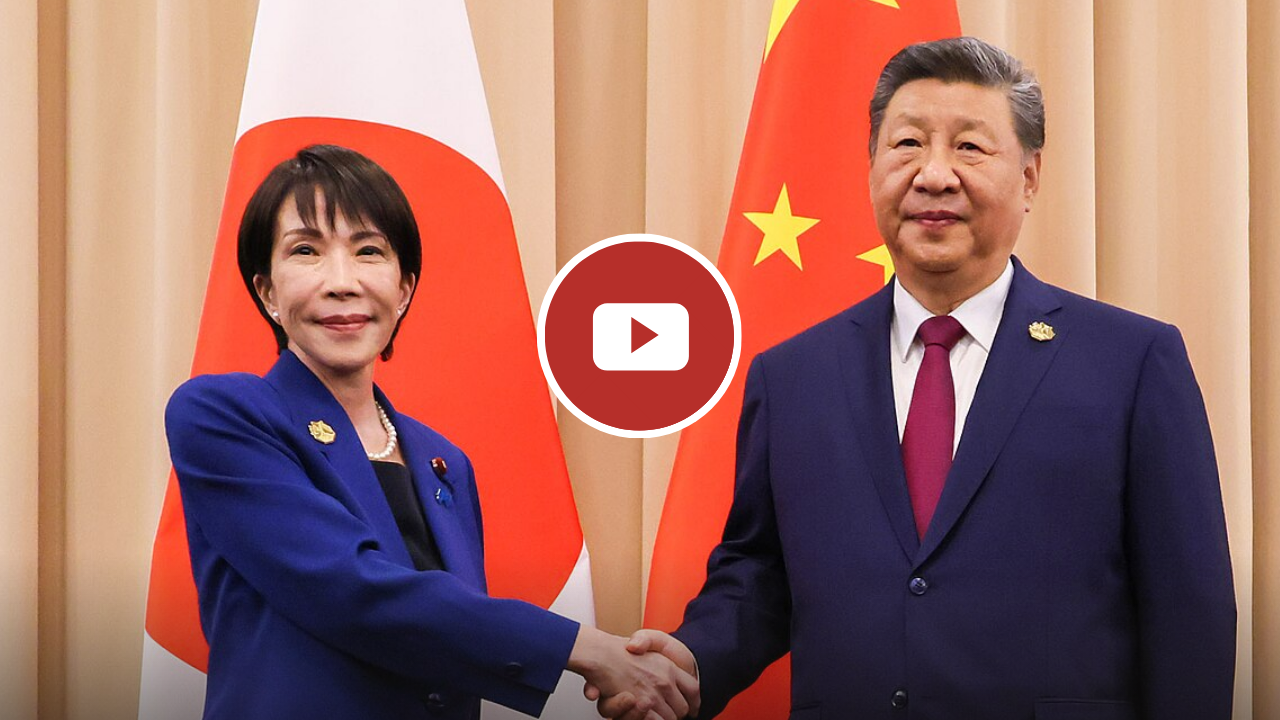
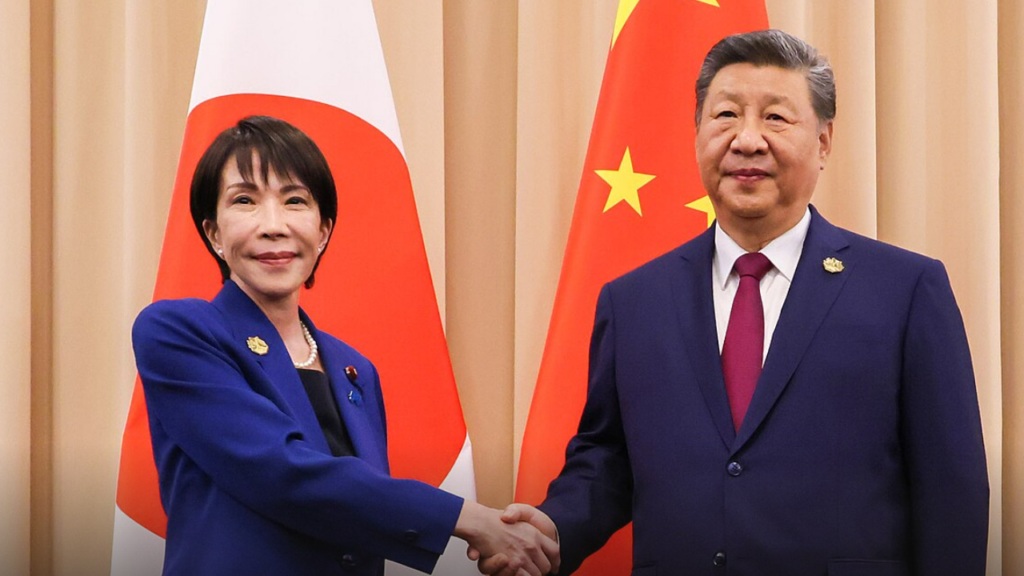
In November 2025, during an unscripted exchange in the Japanese Diet, Prime Minister Sanae Takaichi said that a hypothetical Chinese attack on U.S. forces defending Taiwan could constitute a survival-threatening situation for Japan. The remark set off the sharpest downturn in relations between Tokyo and Beijing in years. China responded with a broad pressure campaign, including a travel advisory, suspended seafood imports, restrictions on rare earth and dual-use exports, and measures against Japanese firms, alongside renewed accusations of Japanese militarism.
Nearly a year later, the two governments remain at an impasse with Beijing maintaining that relations will not fundamentally improve until Takaichi retracts her remarks. The dispute has exposed vulnerabilities in supply chains that Japan and the United States share, reinforced Japan’s commitment to reducing its economic dependence on China, and raised questions in Tokyo about U.S. support at a time when Washington is seeking to stabilize its own relationship with Beijing.
In an interview conducted on September 15, 2026, Indiana University’s Adam Liff and the University of Montana’s Kristin Vekasi join Georgetown University’s Evan Medeiros, NCUSCR board member and Public Intellectuals Program fellow, to discuss what Prime Minister Takaichi actually said about Taiwan, how Beijing has used economic pressure in response, and what the rift means for the United States.
Speakers

Adam P. Liff
Adam P. Liff is professor of East Asian international relations at Indiana University’s Hamilton Lugar School of Global and International Studies, where he is also founding director of the 21st Century Japan Politics and Society Initiative. His research addresses contemporary security and foreign policy challenges in East Asia, particularly Japanese politics and foreign policy, the U.S.-Japan alliance, U.S. allies and Taiwan, U.S. Asia-Pacific strategy, and U.S.-Japan-China relations. He is a nonresident senior fellow at the Brookings Institution’s Center for Asia Policy Studies, a faculty associate at Harvard University’s Program on U.S.-Japan Relations, and an associate-in-research at Harvard’s Reischauer Institute of Japanese Studies.
Dr. Liff is the author of U.S. Allies and the Taiwan Strait (Cambridge University Press, 2025), and his scholarship has appeared in journals such as International Security, The China Quarterly, the Journal of Strategic Studies, and The Washington Quarterly. He previously served as visiting chair in modern and contemporary Japanese politics and foreign policy at Georgetown University’s Walsh School of Foreign Service. He holds a Ph.D. and an M.A. in politics from Princeton University, a postgraduate research certificate in international politics from the University of Tokyo, and a B.A. from Stanford University.

Kristin Vekasi
Kristin Vekasi is the Mansfield Chair of Japan and Indo-Pacific Affairs and an associate professor of political science at the University of Montana. Her research focuses on trade and investment strategies in changing geopolitical environments and on the management of political risk in supply chains. A specialist on Northeast Asia, she has conducted extensive research in China, Japan, and South Korea. Her current work examines how Japan, China, and the United States cooperate and compete in managing complex supply chains, with particular attention to critical minerals and the industries essential to the green energy transition.
Dr. Vekasi is the author of Risk Management Strategies of Japanese Companies in China (Routledge, 2019), and in 2022 she testified before the U.S.-China Economic and Security Review Commission on rare earth policy. Before joining the University of Montana, she was an associate professor at the University of Maine; she has also been a visiting research fellow at the University of Tokyo and a Fulbright fellow at Tohoku University. She is a nonresident fellow at the National Bureau of Asian Research and a member of the Mansfield-Luce Asia Scholar Network. She received her Ph.D. in political science from the University of Wisconsin-Madison.
Moderator

Evan S. Medeiros
Evan S. Medeiros is the Penner Family Chair in Asia Studies in the School of Foreign Service at Georgetown University, where he also serves as Director of the Asian Studies Program. His research and teaching focus on the international politics of East Asia, U.S.-China relations, and China’s foreign and national security policies. He has published several books and articles, including the edited volume Cold Rivals: The New Era of U.S.-China Strategic Competition (Georgetown University Press, 2023), and regularly provides advice to global corporations and commentary to international media.
Dr. Medeiros previously served for six years on the staff of the National Security Council as director for China, Taiwan, and Mongolia, and then as special assistant to the president and senior director for Asia. In the latter role, he was President Obama’s top advisor on the Asia-Pacific and was responsible for coordinating U.S. policy toward the region across diplomacy, defense, economic policy, and intelligence. He is a senior advisor with The Asia Group, a distinguished nonresident fellow on China at the Chicago Council on Global Affairs, and a former member of the National Committee’s board of directors. He holds a Ph.D. in international relations from the London School of Economics and Political Science.