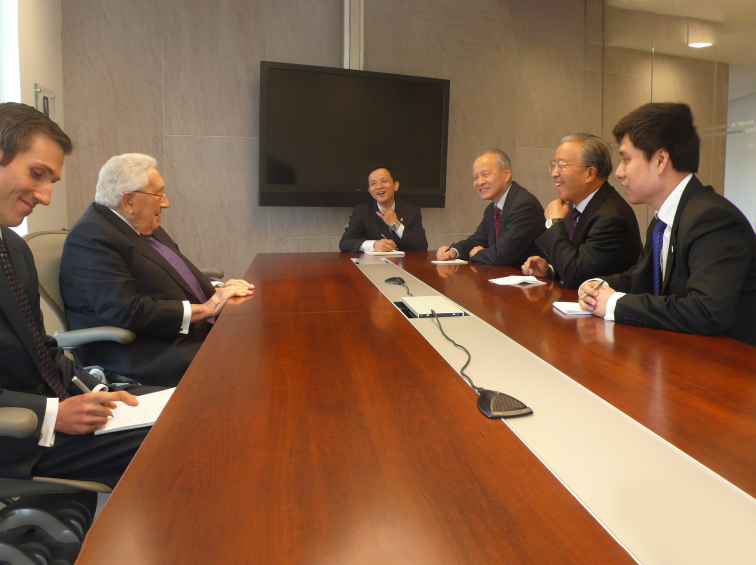
The National Committee’s Track II Strategic Security Dialogue (at times called the Northeast Asia Strategic Security Dialogue) began in 1998 as a National Committee collaboration with the Stanford-Harvard Preventive Defense Project (PDP), a research partnership of Stanford University and Harvard University’s Kennedy School of Government. PDP was established by former Secretary of Defense William Perry and Assistant Secretary Ash Carter to address the lethal legacy of the Cold War. When they decided to include engagement with an emerging China, they turned to the National Committee. The PDP-NCUSCR partnership ran from 1999 to 2017, and provided opportunities for sustained personal interaction with military and political leaders in mainland China and Taiwan. When traveling to mainland China for the dialogue, the American delegation would also add a visit to Taiwan, serving as a trusted liaison between the two sides.
The National Committee reconstituted this Track-II dialogue in 2021 as the sole American organizer, led by co-chairs former National Security Advisor Stephen Hadley and former Chairman of the Joint Chiefs of Staff Joseph Dunford. While the chairs changed, everything else remained constant:
The Purpose: to facilitate thoughtful, informed discussions on military and security issues and foster sustained personal interaction among military and political leaders.
Our Partner: China Foundation for International and Strategic Studies (CFISS).
The Structure and Type of Participants: meetings are held every 12 to 18 months (with occasional exceptions), alternating between China and the United States, and bring together former American and Chinese government officials, military officers, academics, and think tank experts, with deliberate inclusion of a core of the same people, so as to develop and nurture trust.
The dialogue has tackled topics including Taiwan, the Korea Peninsula, mil-to-mil cooperation, bilateral relations, and other key security issues in the Indo-Pacific. These non-governmental, off-the-record, Track II dialogues have created space for innovative thinking, diverse views, and the continued discovery of possible areas of cooperation. There have been 15 iterations, all focused on various aspects of Northeast Asian security issues and occasionally extended to other areas of the world
2025 Track II U.S.-China Strategic Security Dialogue
October 20-24, 2025
Guiyang; Beijing
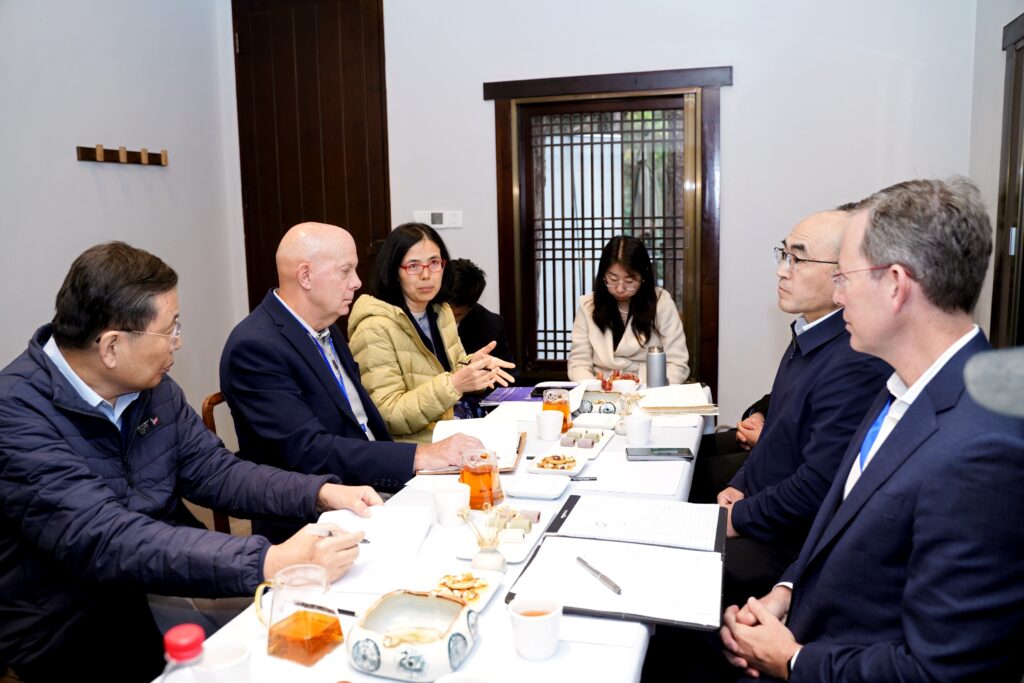
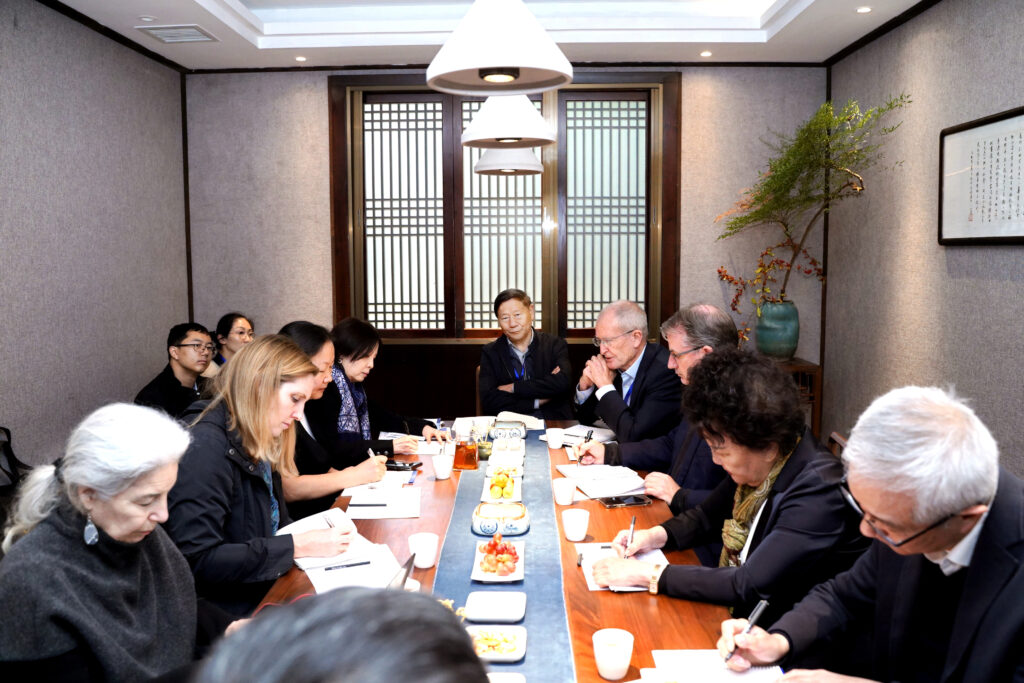
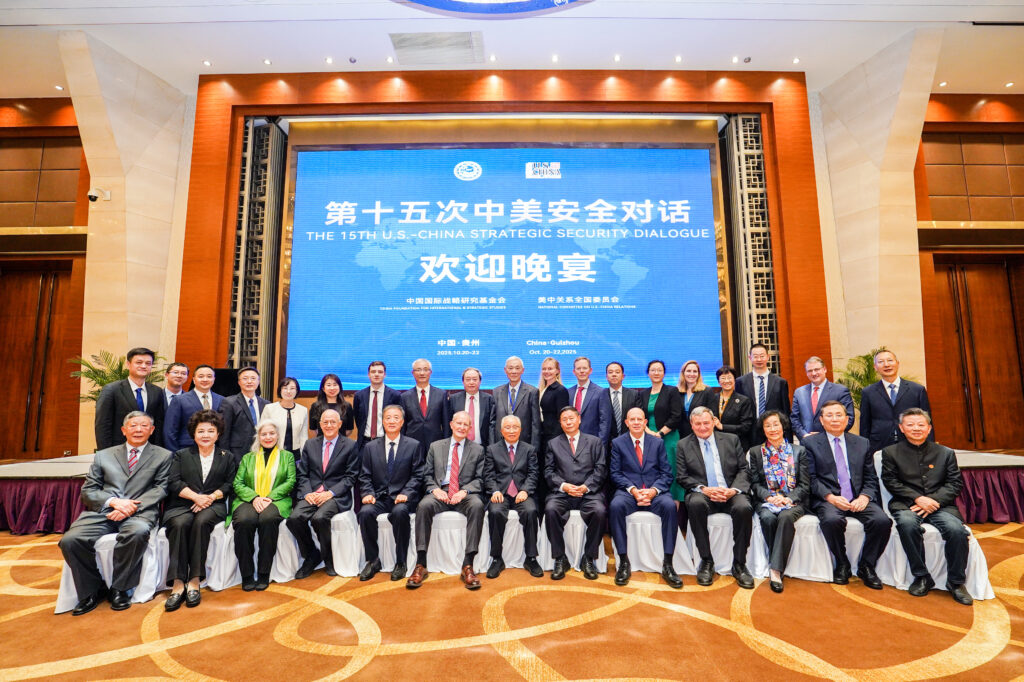
The 2025 meeting in the Strategic Security Dialogue series was held in Guiyang with 11 participants from the United States and 14 Chinese participants, all of whom were security experts: scholars, former government officials, and former military officers. Unfortunately, neither of the American co-chairs (Stephen Hadley and Joseph Dunford) was able to join the trip to China. NCUSCR board member and former PACOM Commander Dennis Blair stepped in to chair the delegation. These talks occurred in the immediate lead-up to the October 30th Trump-Xi meeting in Busan, which added to their importance. The delegation also met with Executive Vice Foreign Minister Ma Zhaoxu, Deputy Minister of the Chinese Communist Party’s International Department Lu Kang, and U.S. Ambassador
to China David Perdue. Topics discussed include mil-to-mil relations, cybersecurity, cross-strait Relations, maritime security, the Russia-Ukraine War, the Middle East – all set in the context of the current U.S.-China relationship
2024 Track II U.S.-China Strategic Security Dialogue
March 24-27, 2024
Honolulu
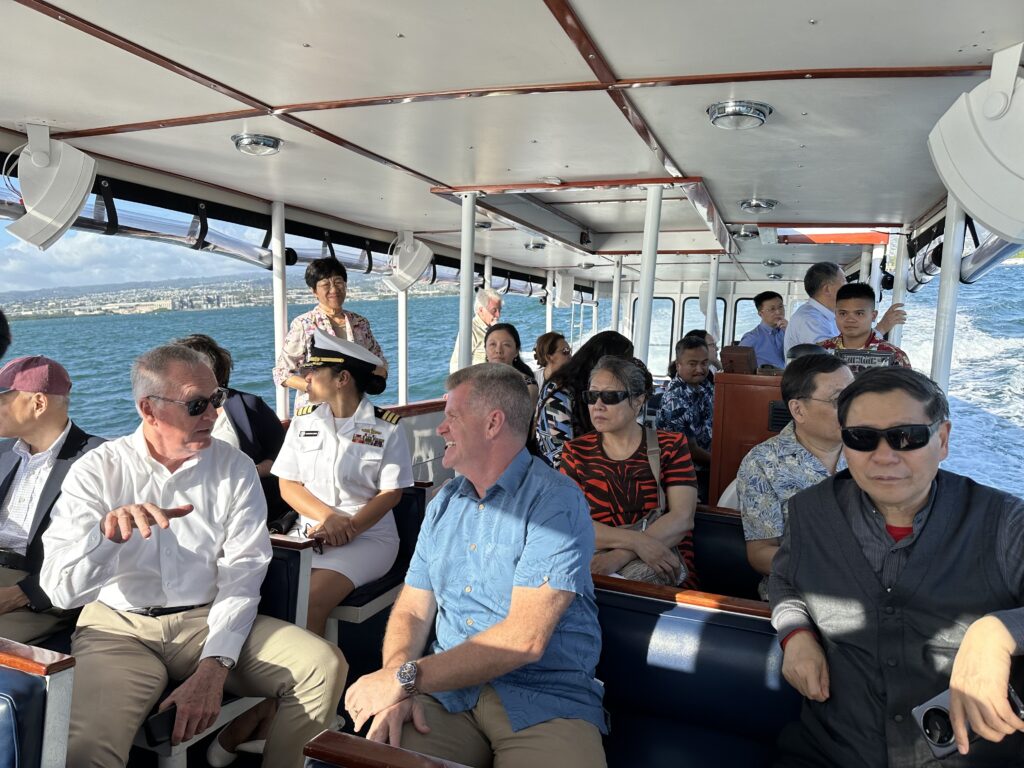
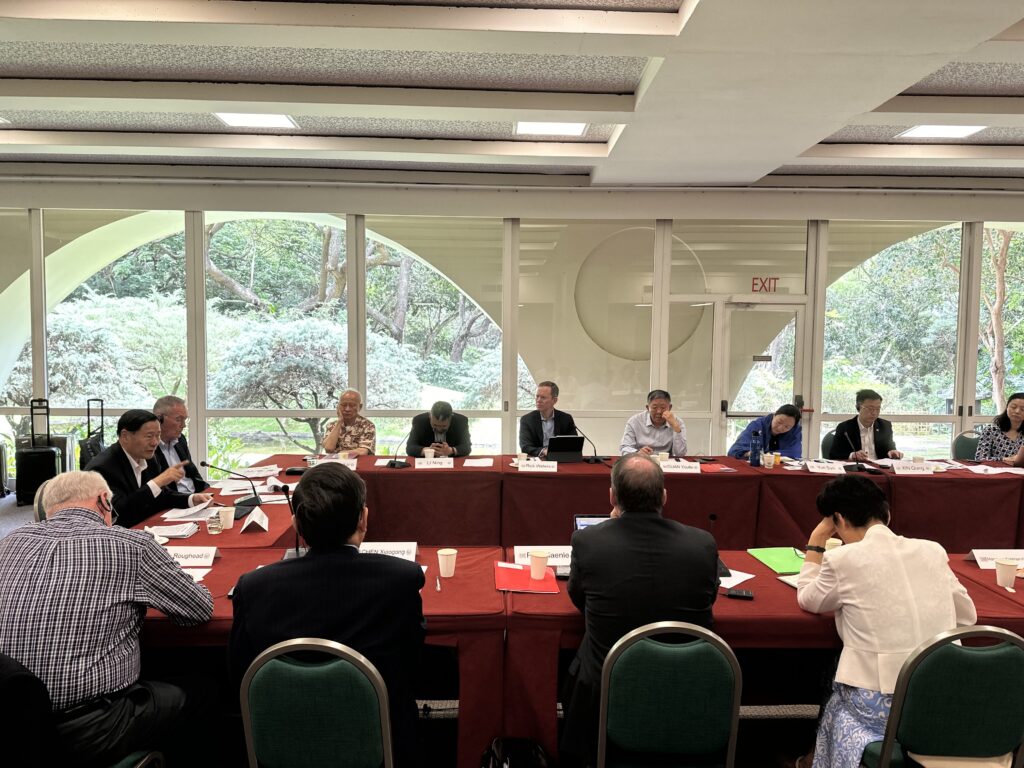
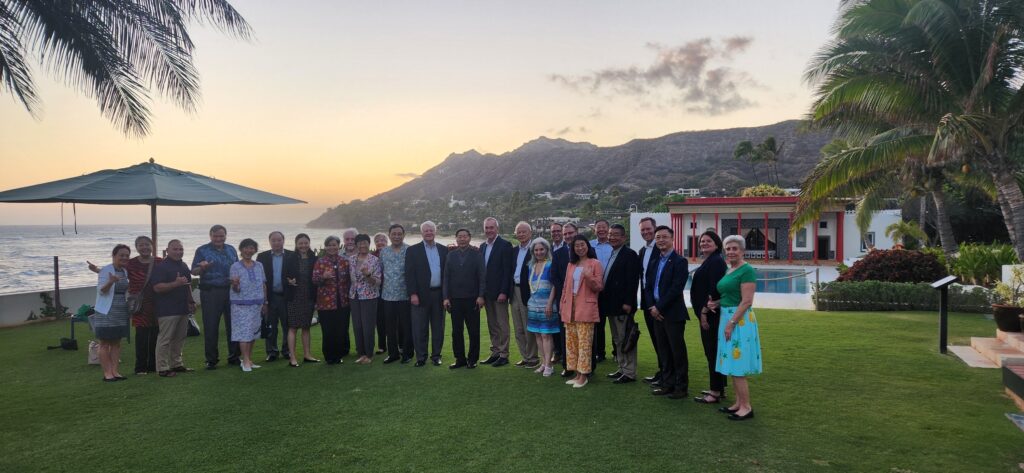
Honolulu was the venue for the 2024 Strategic Security Dialogue: it was attended by ten participants from the United States and eight from China. All were security experts, whether scholars, former government officials, military officers, or policy analysts. The delegations had an afternoon session at the U.S. Indo-Pacific Command for discussions with then-Commander Admiral John Aquilino and other senior PACOM officials. Consensus was that the dialogue was one of the best and most open between the two sides. Major areas of discussion included bilateral relations, mil-to-mil relations, artificial intelligence and technology in military modernization, Taiwan, the Korean peninsula, as well as the impact of the conflicts between Russia-Ukraine and Israel-Palestine both regionally and globally.
2023 Track II U.S.-China Strategic Security Dialogue
October 30-31, 2023
Virtual
The 2023 Strategic Security Dialogue was conducted virtually. American participants numbered 13 and Chinese 16. All agreed that the dialogue was valuable, especially as the discussion occurred at an opportune moment, providing a foundation for the mid-November APEC meetings between Presidents Biden and Xi. However, they also all agreed that in-person meetings are much more beneficial. Key topics covered were bilateral relations, military-to-military cooperation, regional security environment, Taiwan, and the Korean peninsula.
2021 Track II U.S.-China Strategic Security Dialogue
May 24-25, 2021
Virtual
The 2021 Strategic Security Dialogue was different from past programs in many ways. It marked the resumption of this long dormant series and was the first time that the National Committee served as the sole host on the American side. It had two new co-chairs: Steven Hadley and General Joseph Dunford, taking over given the retirement of Secretary Bill Perry and the tragic death of Secretary Ash Carter. And it was virtual due to continued COVID travel restrictions.
In this iteration, there were 15 participants on each side and topics included the Korean Peninsula, Taiwan, South China Sea, crisis prevention and management, and military-to-military relations.
While both sides were very pleased to resume the conversation, there was mutual agreement that in-person dialogue is much more productive and satisfying than virtual gatherings.
2017 Rump Session of the Track II U.S.-China Strategic Security Dialogue
March 21, 2017
Shanghai
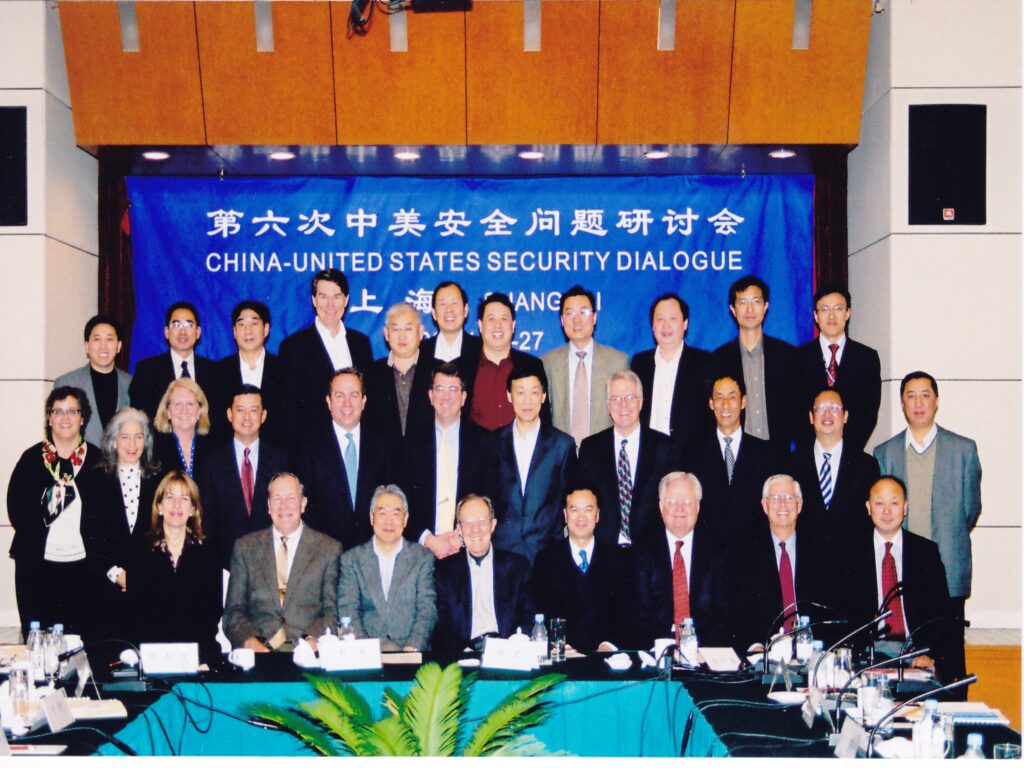
Taking advantage of Secretary William Perry’ private visit to Shanghai along with several Strategic Security Track II Dialogue American participants, a rump session was held there for three quarters of the day. The focus was on military and security issues in the U.S.- China relationship. The Shanghai Academy of Social Sciences was cohost along with CFISS – our usual partner. Twenty Chinese attended, a combination of the regular Chinese participants based in Shanghai, a few Beijing-based core participants who flew down for the day, and several Shanghai Sino-American specialists.
2014 Track II Dialogue on U.S.-China Strategic Security
January 18 – 26, 2014
Rancho Mirage, Washington D.C.
The 2014 meeting of the Strategic Security Dialogue series was held at Sunnylands (the Annenberg Retreat in Rancho Mirage), where Presidents Xi and Obama had held their historic summit six months earlier. This was the first group focused on Sino-American relations to gather there post-summit, and participants felt a special responsibility to build on that meeting, as well as on the solid relationships built during fifteen years of our Track II Dialogues on this area. Four major areas were covered: bilateral relations (including mil-to-mil issues), North Korea and other Northeast Asia security issues, the situation after the U.S. withdrawal from Afghanistan, and the resulting geopolitical strategy in Central Asia and the challenges and opportunities in building a new major country relationship.
2011 Track II U.S.-China Strategic Security Dialogue
June 24-29, 2011
Taiwan, Beijing
This iteration took place in China and brought together 12 Chinese participants and 11 American participants. The dialogue occurred in the run-up to Taiwan’s 2012 election, when domestic political pressures were sharpening sensitivities around cross-strait signaling and crisis risk. Topics included proliferation and other strategic challenges, cross-trait issues, the current Sino-American relationship and the driving domestic forces shaping foreign policy in each of our countries, and mil-to-mil cooperation between the United States and China.
Prior to arriving in Bejing, the delegation stopped in Taiwan for senior-level meetings with National Security Council Secretary-General Chiou I-jen, former KMT Chairman Lien Chan, Minister of Defense Lee Chieh, and President Chen Shui-bian.
2010 Track II U.S.-China Strategic Security Dialogue
January 22-27, 2010
Washington D.C.
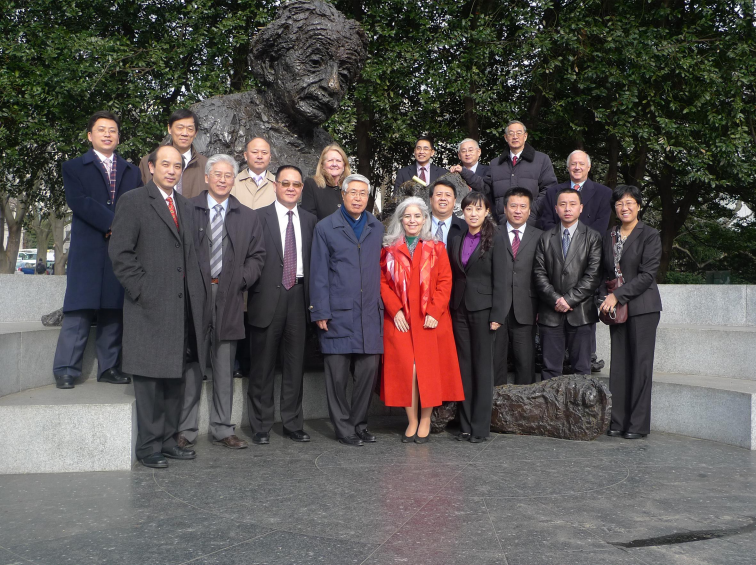
Thirteen American participants and 16 Chinese participants gathered in Washington, D.C. to talk about their respective analyses of power trends in the world and their implications, prospects for U.S-China cooperation on security issues (North Korea, Cross-Strait, Iran), and paths to partnership. In addition to the formal dialogue sessions, the delegation held a series of senior-level meetings with Undersecretary of Defense Michèle Flournoy, Deputy Secretary of State James Steinberg, Assistant Secretary of State for East Asian and Pacific Affairs Kurt Campbell, and National Security Council staff, including Jeff Bader, Senior Director and Special Assistant to the President for Asian Affairs, and Evan Medeiros, Director for China, Taiwan, and Mongolian Affairs.
2008 Track II U.S.-China Strategic Security Dialogue
June 22-July 1, 2008
Taiwan, Beijing
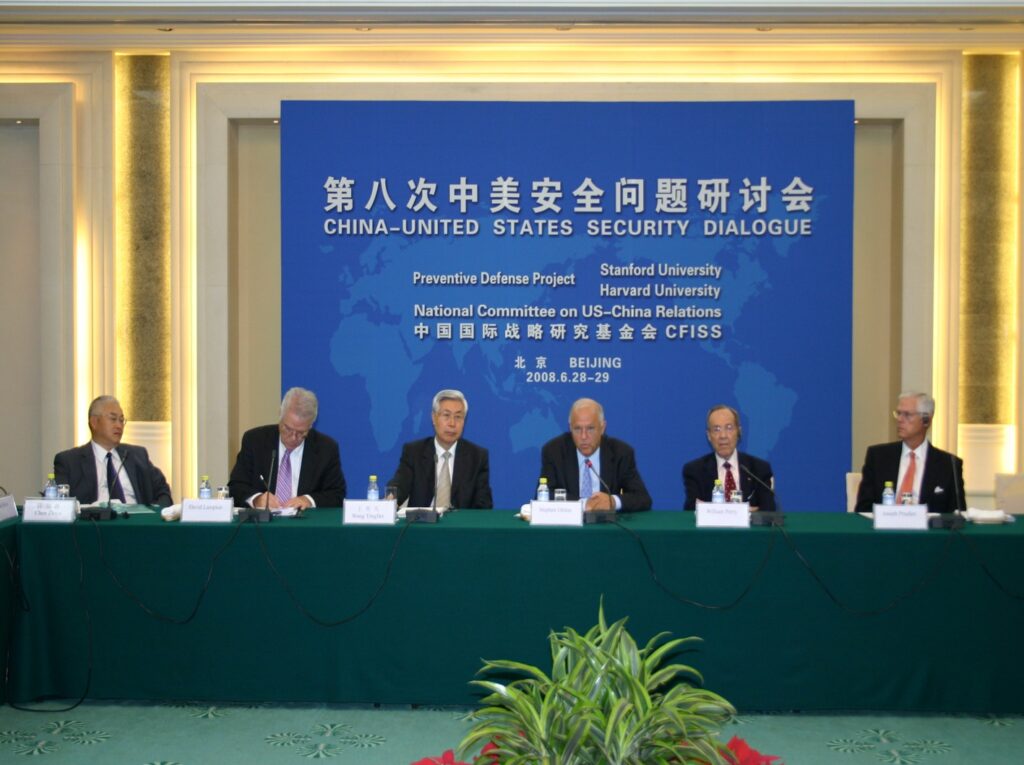
This iteration took place during a period of China-Taiwan rapprochement, when both sides were emphasizing the possibility of an unprecedented thaw in cross-Strait relations. The initial stop was in Taiwan, where the 10 American participants met with President Ma Ying-jeou and his senior advisors on his 33rd day in office; the heads of the Foreign and Defense Ministries; and the chairs of the KMT and DPP. The group then had the rare opportunity to visit the island of Kinmen – meeting with the Kinmen Magistrate and the general in charge of the Kinmen Defense Command. In Beijing, the American delegation had a productive dialogue with the 19 Chinese participants on the Taiwan factor in U.S.-China Relations, the prospect of Sino-American cooperation on security issues, and North Korean and Iranian nuclear issues. The group also met with Premier Wen Jiabao and Minister of National Defense Cao Gangchuan.
2006 Track II U.S.-China Strategic Security Dialogue
September 28-30, 2006
Honolulu
Honolulu was the venue for the 2006 meeting. Thirteen Americans and an equal number of Chinese participants, drawn from the security, academic, and former government communities, met to discuss three core areas: strategic considerations shaping the broader bilateral
relationship, U.S.–China–Japan dynamics and related Northeast Asia security issues, and the overall trajectory of U.S.–China relations.
2005 Track II U.S.-China Strategic Security Dialogue
January 22-29, 2005
Taiwan, Shanghai, Beijing
This iteration of the Strategic Security Dialogue took place in Taiwan, Shanghai, and Beijing. In the former, the Americans met with President Chen Shui-bien, the Minister of Defense Li Chieh, heads of the three major political parties, and various other government and business leaders. In Shanghai 16 Chinese and 12 American participants drawn from the security, academic, and former government communities met for discussions in four major areas: new foreign policy thinking in the United States and China, the broader trajectory of Sino-American relations, the Taiwan issue as a central fault line in U.S.-China relations, and East Asian security dynamics. Senior-level meetings took place in Beijing with Premier Wen Jiabao, Minister of Foreign Affairs Li Zhaoxing, and Minister of National Defense Cao Gangchuan.
2003 Track II U.S.-China Strategic Security Dialogue
November 9-11, 2003
New York City
The 2003 Strategic Security Dialogue convened in New York, bringing together 14 American participants and 19 Chinese participants from the security, academic, and former government communities. The discussions focused on the areas of North Korea and the evolving security challenge on the peninsula; cross-strait relations and the drivers of stability and volatility; the overall trajectory of U.S.–China relations; and the domestic political situations in the United States, Taiwan, the PRC, and several other Asian countries and how those internal dynamics were influencing policy choices.
2002 Track II U.S.-China Strategic Security Dialogue
November 16-21, 2002
Taiwan, Beijing
Building on a year of heightened senior-level engagement that included President Bush’s visit to China, the 13 American participants in the 2002 U/S/-China Strategic first convened in Taiwan for seminars and meetings with the chairs of the KMT, DPP, and People’s First Parties, as well as with President Chen Shui-bian. In Beijing the two-day dialogue with 15 Chinese participants focused on the current international security situation and the evolving anti-terrorism struggle; practical steps to strengthen China–U.S. cooperation on counterterrorism, proliferation risks, with particular
attention to weapons of mass destruction and North Korea’s nuclear program; and approaches to managing potential crises between China and the United States. It was followed by meetings with President Jiang Zemin, Vice Premier Qian Qichen, and Defense Minister Chi Haotian.
2001 Track II U.S.-China Strategic Security Dialogue
December 13-15, 2001
Palo Alto
The Strategic Security Dialogue convened at Stanford, California just three months after September 11, at a moment when both sides were reassessing assumptions about threats, priorities, and the stability of the broader strategic environment. The meeting brought together 12 American and 15 Chinese participants, including senior experts and former officials. with a shared sense that the post-9/11 landscape could either widen space for practical cooperation or harden old suspicions if left unmanaged.
How September 11 reshaped strategic priorities and threat perceptions in Washington and Beijing; whether those changes altered the dynamics of the U.S.-China-Russia triangle; the prospects for cross-Strait relations; and crisis management in U.S.-China relations were the primary areas of focus. The Belgrade Embassy bombing and the EP3 Hainan incident were used as concrete case studies, first to assess lessons learned and then to identify practical initiatives to improve communications, de-escalation, and decision-making under pressure.
1999 Track II U.S.-China Strategic Security Dialogue
February 27-March 8, 1999
Shanghai, Beijing, Hong Kong, Taiwan
This visit spanned Shanghai, Beijing, Hong Kong, and Taiwan. The Dialogue portion brought together security experts, scholars, and former government officials: eight U.S. participants and 23 Chinese participants who discussed security issues in the Asia-Pacific region, the prospects for a nuclear arms race in South Asia, and how trends in Russia and Central Asia could reshape East Asian security. The delegation met with both PRC President Jiang Zemin and ROC President Lee Teng-hui and conducted a site visit to the 28th Air Division.
Photo Gallery