
Monday, September 28, 2026 | 12:00 AM EDT
In Illiberal Law and Development, Susan H. Whiting addresses two topics in Chinese political economy: how economic development has occurred despite insecure property rights, and how the Chinese state has maintained political control as land transfers stoke unrest. Dr. Whiting focuses on the role of illiberal law in reassigning property rights and redirecting grievances.
In an interview conducted on September 28, 2026, Susan Whiting joins Arunabh Ghosh to discuss the role of the state in specifying property rights and maintaining authoritarian rule.
Speaker

Susan H. Whiting
Susan H. Whiting is a professor of political science at the University of Washington. She is the author of Illiberal Law and Development: Property Rights and Conflict over Land in China (2026) and Power and Wealth in Rural China: The Political Economy of Institutional Change (2001), both published by Cambridge University Press. Her research on property rights, state capacity, rule of law, economic development, and civil society in China has been published in journals such as Comparative Political Studies, Studies in Comparative International Development, China Quarterly, Journal of Asian Studies, and Voluntas, as well as in edited volumes such as Holding China Together and Trust and Governance, among others.
She holds a Ph.D. in political science from the University of Michigan and a B.A. in East Asian studies from Yale University. She is a fellow in the NCUSCR Public Intellectuals Program.
Moderator
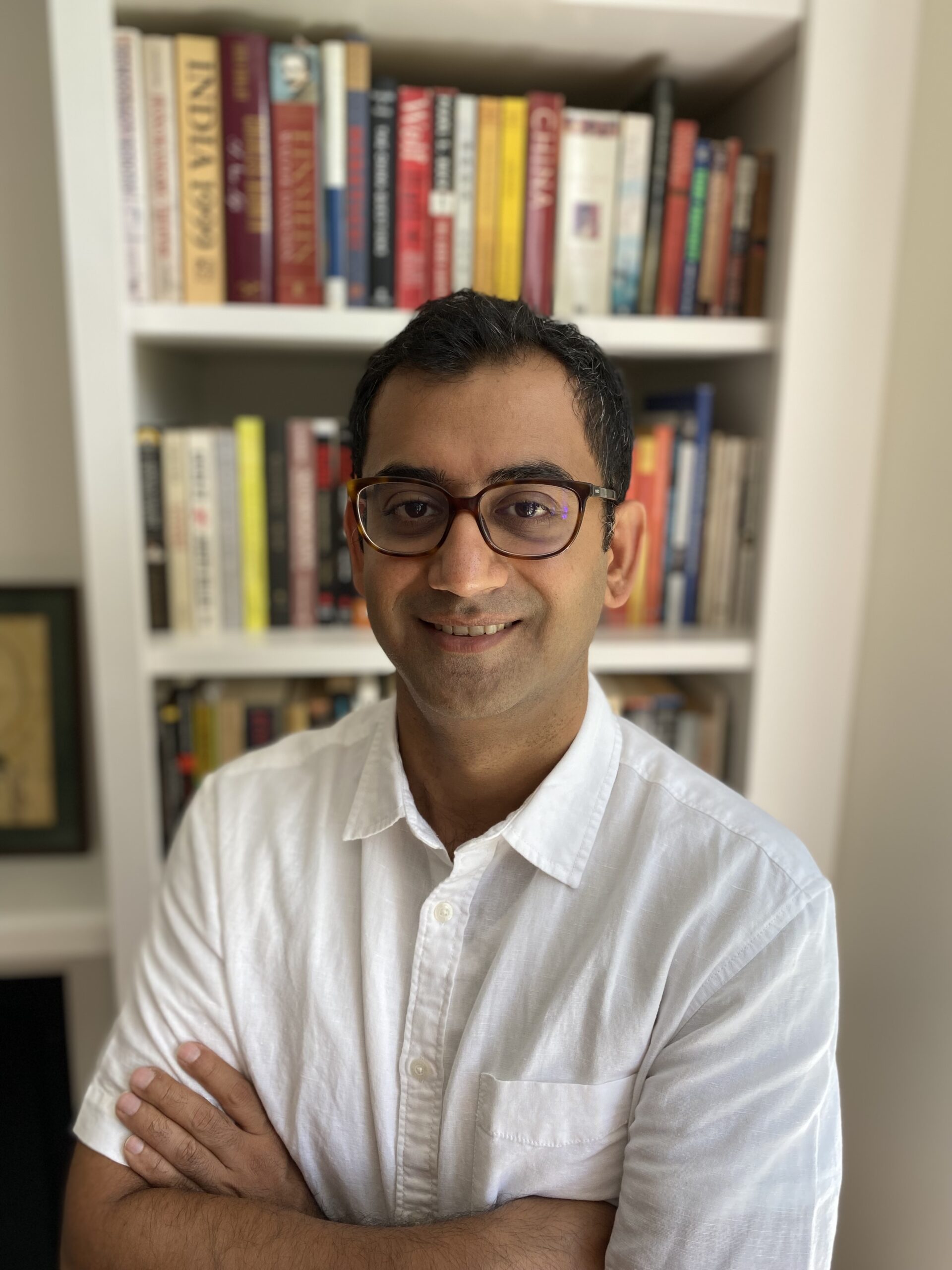
Arunabh Ghosh
Arunabh Ghosh (BA Haverford; Ph.D. Columbia) is a professor in the History Department at Harvard University. A historian of modern China, his interests include social and economic history, history of science and statecraft, environmental history, and transnational history. Dr. Ghosh is the author of Making it Count: Statistics and Statecraft in the Early People’s Republic of China (Princeton, 2020). Recent peer-reviewed work has appeared in Comparative Studies in Society and History, Isis, History and Technology, the International Journal of Asian Studies, and Environment and History. Ghosh is now working on a book titled “The Significance of Small Things: Hydropower and Rural Energy in China” (under contract with Stanford University Press). He is a fellow in the NCUSCR Public Intellectuals Program.