Friday, January 9, 2026 | 4:00 PM EST
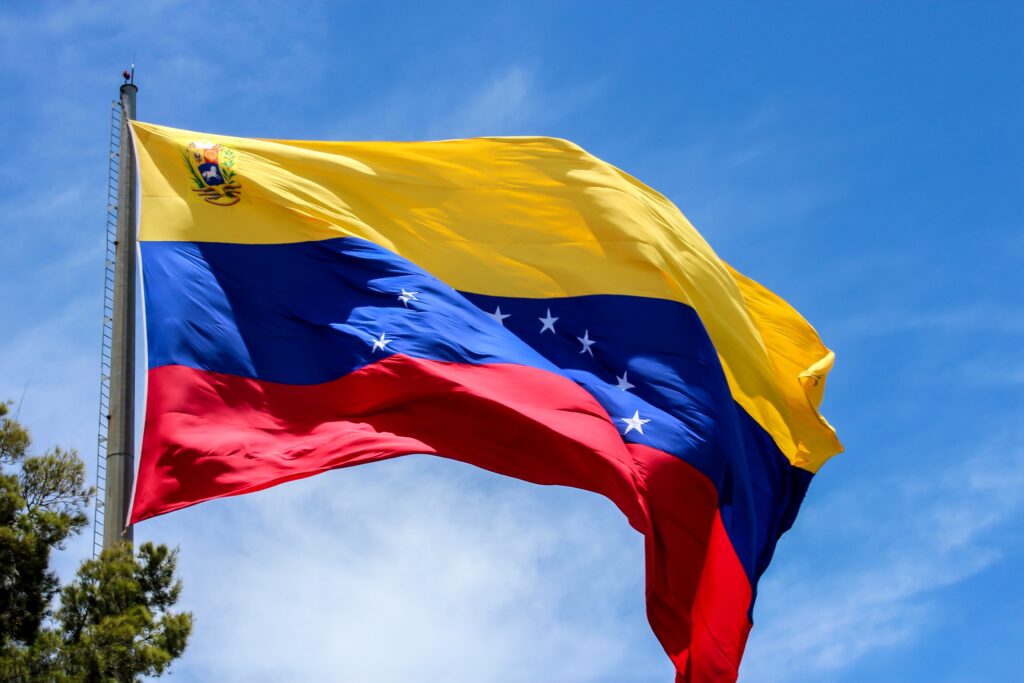
On January 3, 2026, the United States launched a military operation in Venezuela that resulted in the capture of President Nicholas Maduro and an escalation in U.S.-Venezuela tensions. This intervention has sparked intense global debate – raising questions about international law, sovereignty, and the use of force. It also highlighted the broader implications of intensifying U.S.–China competition across Latin America.
In an event held on January 9, 2026, Margaret Myers and Tong Zhao, in conversation with Jesse Marks, discuss how this unexpected U.S. military action is reshaping strategic calculations in Beijing and Washington, what it may signal for Taiwan, and what these developments mean for the future of U.S.-China relations.
Speakers

Margaret Myers
Margaret Myers is managing director of the SAIS Institute for America, China, and the Future of Global Affairs, senior advisor to the Asia and Latin America Program at the Inter-American Dialogue, and a researcher with the Núcleo Milenio sobre los Impactos de China en América Latina.
She has published extensively on China’s relations with the Latin America and Caribbean region, testified before the U.S. House of Representatives and Senate on the China–Latin America relationship, and is regularly featured in major domestic and international media. She also serves on the faculty of Johns Hopkins SAIS.
Tong Zhao
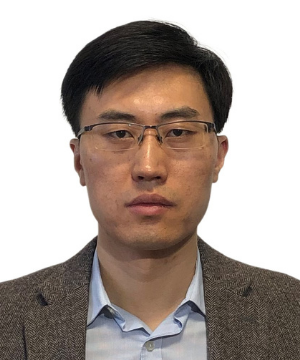
Tong Zhao is a senior fellow in the Nuclear Policy Program and the China Center of the Carnegie Endowment for International Peace. Formerly based in Beijing, he now conducts research in Washington on nuclear deterrence, nonproliferation, arms control, emerging military technologies, China’s security policy, and regional security in the Asia-Pacific. With a technical background, Zhao also serves as a nonresident researcher with Princeton University’s Program on Science and Global Security. He holds a Ph.D. in science, technology, and international affairs from the Georgia Institute of Technology, as well as an M.A. in international relations and a B.S. in physics from Tsinghua University. He is the author of Political Drivers of China’s Changing Nuclear Policy: Implications for U.S.–China Nuclear Relations and International Security, Tides of Change: China’s Nuclear Ballistic Missile Submarines and Strategic Stability, and Narrowing the U.S.–China Gap on Missile Defense: How to Help Forestall a Nuclear Arms Race. His writing has appeared in The Atlantic, The Economist, Foreign Affairs, Foreign Policy, and The New York Times, among others.
Moderator
Jesse Marks
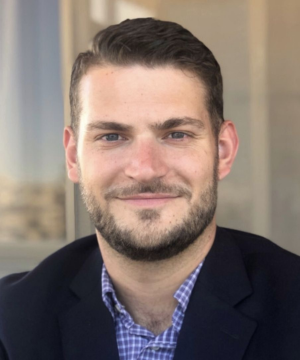
Jesse Marks is the founder of Rihla Research & Advisory LLC, an international consultancy focused on China–Middle East geopolitics, and the Global Critical Minerals Platform, an AI startup advancing innovation in critical mineral intelligence and supply-chain analysis.
He previously served as a defense policy advisor in the Office of the Secretary of Defense for Policy – Middle East, where he worked across both the first Trump and Biden administrations on regional security and defense cooperation. He is the author of Coffee in the Desert, a newsletter dedicated to discourse on growing Sino-Middle East relations. His career spans senior roles across the U.S. government, leading think tanks, civil society organizations, and the United Nations.
He is a doctoral student at Australian National University, focusing on U.S.–China competition in the Middle East. Marks was previously a Fulbright Program fellow to Jordan, a Schwarzman College Scholar at Tsinghua University, and a Scoville Peace Fellow at the Stimson Center.